
World of Warcraft’s combat is surprisingly complex, with dozens of overlapping spells, mechanics, and environmental hazards firing off at once. Yet, despite the chaos, the game is remarkably easy to “read.” This is due to a masterclass in visual language—the use of color, shape, and animation to tell the player exactly what is happening. This guide explores the “readability” of Warcraft combat and how it ensures that even the most complicated raid encounter remains a solvable puzzle.

The Language of Shapes and Colors
Readability is the art of communicating the maximum amount of information with the minimum amount of visual noise. The developers use “shape language” to tell you the danger level of a spell before you’ve even identified it. A swirling, dark-purple pool on the ground is a universal signal for “move away.” A bright, gold-accented circle is a signal for “stand here to heal.” By keeping the visual cues consistent across twenty years of updates, players can instinctively react to new mechanics. Your brain has been trained to recognize these patterns. Even when you are playing a new raid, you don’t have to relearn what “red fire” means; the visual language is a stable, reliable foundation.

This is furthered by the game’s “art budget” for combat clarity. While modern games often over-saturate the screen with flashy particle effects, WoW balances “flash” with “function.” Key abilities are designed to be high-contrast and distinctive, ensuring that when an important mechanic occurs, it stands out from the background. This clarity is what allows for the high-skill ceiling of the modern game. If the combat weren’t readable, the difficulty would feel unfair. Because it *is* readable, the difficulty feels like a challenge of skill. It ensures that when you die, you know *why* you died, which is the most important rule of fair game design.
Principles of Combat Clarity
| Signal | What it Tells the Player |
|---|---|
| Color Contrast | Highlights danger vs. safety. |
| Consistent Shapes | Defines the area-of-effect for mechanics. |
| Ability Animations | Warns of incoming spikes or big damage. |
| Audio Feedback | Acts as an secondary, non-visual warning. |
Mastering the Visual Chaos
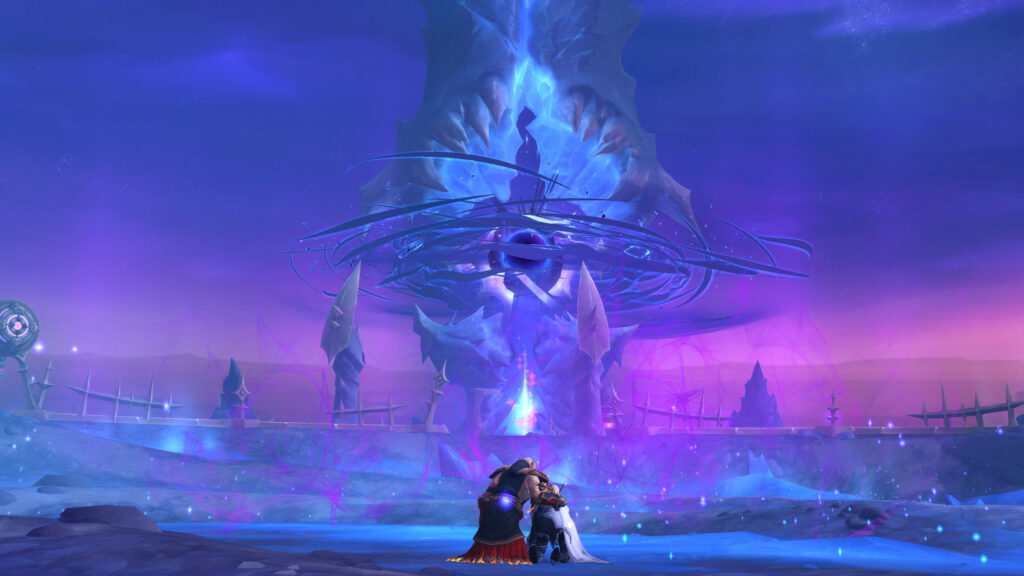
For the veteran, this visual language becomes a form of instinctual processing. You start to see the raid room as a series of colored zones and shapes rather than a detailed fantasy environment. This “de-skinning” of the game is what allows you to survive high-level content. You are constantly reading the interface and the environment, filtering out the “art” and focusing on the “code.” This is the ultimate level of Warcraft play—where you and the game are in sync, and every visual cue translates instantly into action.